Buildfix

Foundation Problems? Find Out What’s Really Going On.

Find the cause, stabilise the ground beneath your home, and level your foundation — Permanently.

  • Free quote · 1–2 day repair · 20-year warranty
  • Structural Engineers · Licensed Builders · Skilled Technicians

Don't take our word for it

Trustpilot
Google

How to Spot Foundation Problems in Your Home

Your home’s foundation carries everything above it — walls, floors, roof. When the soil underneath shifts, shrinks, or washes away, the foundation moves with it. That movement transfers upward through the structure, and here’s what it looks like.

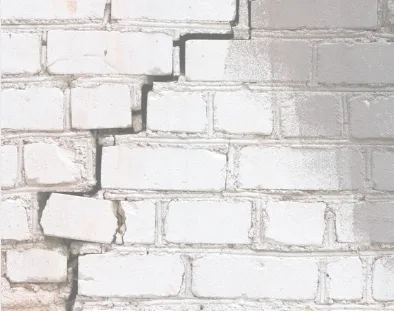
Stepped crack following mortar joints in brick wall caused by foundation subsidence

Stepped Brick Cracks

Cracks that follow the mortar joints in a staircase pattern are one of the clearest signs of foundation movement. The brickwork is rigid — when the foundation shifts beneath it, the wall has to give somewhere. The crack follows the weakest path: the mortar joints.

Timber floor dipping away from skirting board due to foundation settlement

Floors That Dip

A floor that slopes to one side or pulls away from the skirting is a sign the foundation beneath has settled unevenly. You might notice it when a ball rolls on its own, or when gaps appear between the floor and the walls.

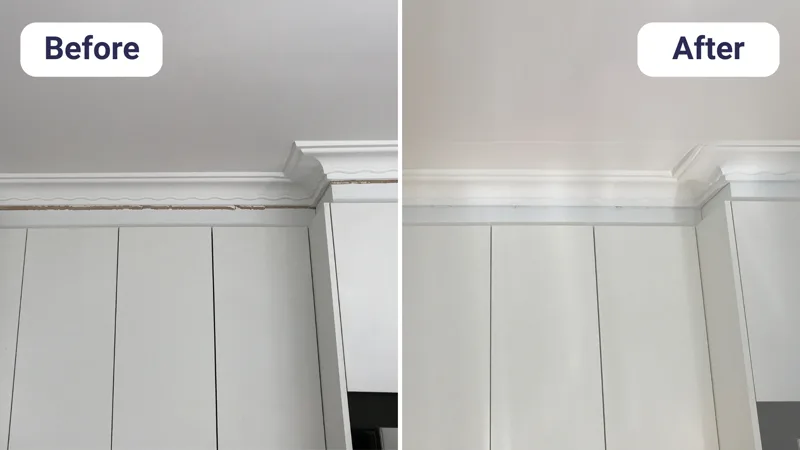
Gap opening between cornice and ceiling caused by foundation movement

Gaps Around Cornice

When a gap appears between the cornice and the ceiling — or the cornice and the wall — it’s rarely a plastering problem. Foundation movement pulls the wall downward while the ceiling stays put, and the cornice line is where the strain shows first.

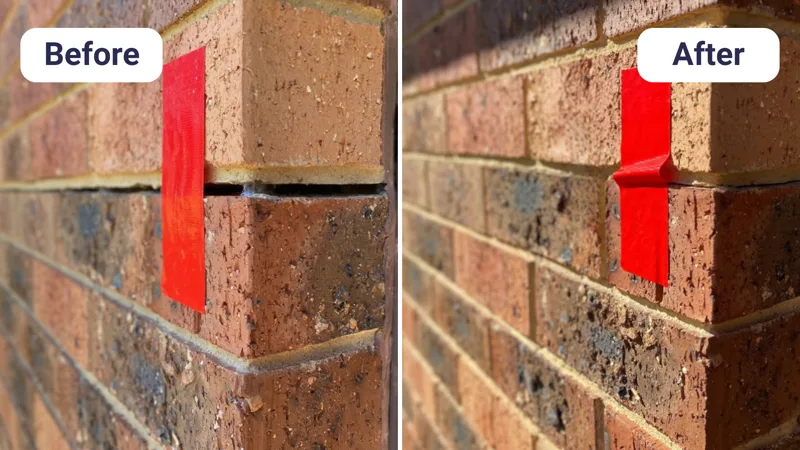
Horizontal crack running along mortar course in brick wall from foundation movement

Horizontal Cracks

A horizontal crack running along a mortar course is a sign of lateral pressure or differential settlement. One part of the wall is being pushed or pulled in a different direction to the rest. Unlike stepped cracks that follow gravity, horizontal cracks often indicate the foundation is tilting.

Gap opening between brickwork and window frame caused by foundation subsidence

Gaps Around Windows

Gaps opening between the brickwork and the window frame mean the wall around the opening is shifting. Windows and doors are weak points in any wall — when the foundation moves, the stress concentrates there first. If the gap keeps growing, the foundation is still moving.

Cracks appearing on both sides of an internal archway due to foundation movement

Opposing Cracks

Cracks appearing on both sides of a room — running in similar directions — are a strong sign of foundation movement. The walls on each side are being pulled by the same shift underneath, and the doorway or archway between them concentrates the stress. When you see matching cracks across a room, the foundation is almost always involved.

Expansion joint in brickwork opened wide due to foundation settlement

Wide Expansion Joints

Expansion joints are designed to allow small, seasonal movement. When they open up well beyond their original width, it’s no longer thermal expansion — the foundation on one side has dropped, pulling the two sections of wall apart.

Corner of brick home sinking away from ground level

Corners Dipping

A corner of the house that’s visibly lower than the rest is one of the most obvious signs of foundation subsidence. Corners are vulnerable because they sit at the edge of the footing, where the soil is most exposed to moisture changes and erosion.

Door sticking in frame due to uneven foundation settlement

Sticking Doors

Doors that used to close smoothly now drag or jam. When the foundation shifts, the frame twists out of square — and you feel it every time you open and shut a door. It’s one of the earliest signs that something is moving underneath.

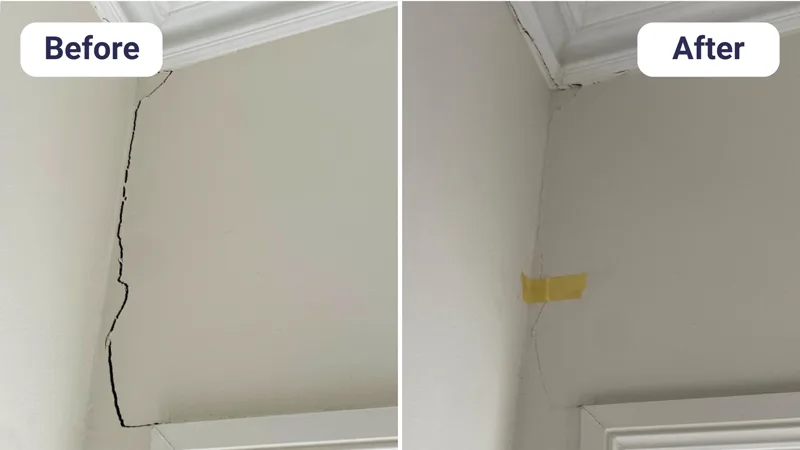
Interior cornice separating from wall and ceiling at corner junction

Cornices Separating

When the cornice pulls away from the wall or ceiling — especially at corners or above doorways — it’s usually the wall dropping while the ceiling stays in place. Patching it is temporary. Until the foundation is stabilised, the gap will keep coming back.

Built-in wardrobe sliding doors misaligned and not closing flush

Wardrobe Doors Misaligned

Built-in wardrobes are fixed to the wall and floor. When the foundation moves, the frame distorts — and sliding doors that used to glide now jam, overlap, or leave gaps. It’s the same problem as sticking doors, just showing up in a different part of the house.

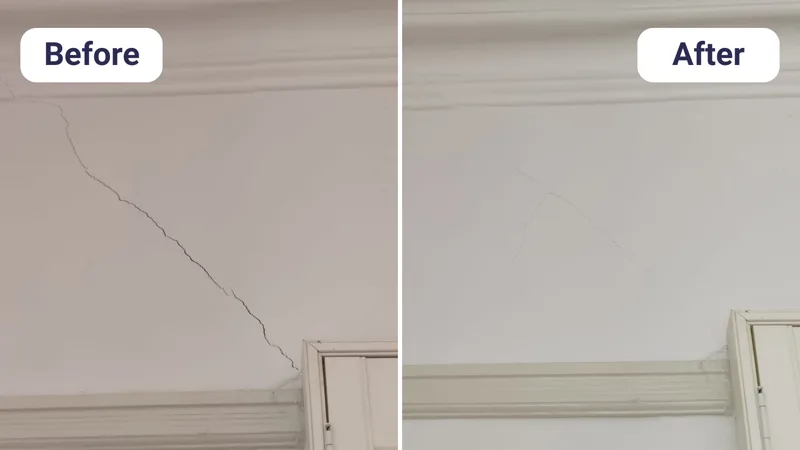
Crack running diagonally from corner of window frame through plaster

Cracks Above Windows

Cracks that radiate from the corner of a window or door frame are stress fractures. The opening in the wall creates a weak point, and when the foundation shifts, that’s where the wall gives way. If the crack is growing, the movement hasn’t stopped.

Rendered wall separating with wide vertical crack beside window

Wall Separation

When a vertical crack opens wide enough to see daylight through it, the wall is physically separating. This happens when one section of the foundation drops while the adjacent section holds — the wall above is pulled apart at the weakest point.

Floor tiles lifting with visible gap between tile edge and skirting

Gaps Under Tiles

Tiles that lift, crack, or develop hollow spots underfoot are reacting to movement in the slab beneath them. When the foundation settles unevenly, the slab flexes — and rigid tiles can’t flex with it. Gaps between the tile edge and the skirting confirm the floor has dropped.

Kitchen benchtop pulling away from tiled splashback due to foundation movement

Worktop Movement

A benchtop pulling away from the splashback — or a gap opening between the bench and the wall — means the floor and the wall are no longer level with each other. The cabinets follow the floor; the tiles follow the wall. When the foundation moves, the two go in different directions.

Tiled floor dropping away from skirting board with exposed gap at base

Floors Dropping

When the floor drops away from the skirting board — leaving a visible gap at the base of the wall — the slab or stumps beneath have settled. The wall stays anchored to the footing while the floor sinks, and the gap keeps growing until the foundation is stabilised.

Interior wall pulling away from door frame with visible gap

Walls Pulling Away

A gap opening between a wall and the door frame — or between the wall and the ceiling — means the wall is being pulled in one direction by foundation movement. The frame is fixed to the structure around it; the wall follows the part of the foundation that’s moving.

Brick wall leaning outward with vertical crack due to uneven foundation settlement

Leaning Walls

The source of leaning or off-level walls is the same as jammed doors and sticking windows. As your house sinks, the unevenness of your home’s foundations can cause walls to lean one way or another. Leaning walls are dangerous if left unchecked — they have the potential to collapse and cause serious injury.

Keyhole Surgery for Your Foundation.

Non-Invasive. Precision-Controlled. Guaranteed.

No Excavation. No Heavy Machinery. No Guessing.

Sticking doors. Cracks in the walls. Floors that dip. These aren't cosmetic problems — they're your foundation telling you something is moving underneath. The longer it goes, the more damage the structure above absorbs. A structural engineer can tell you exactly what's happening and why.

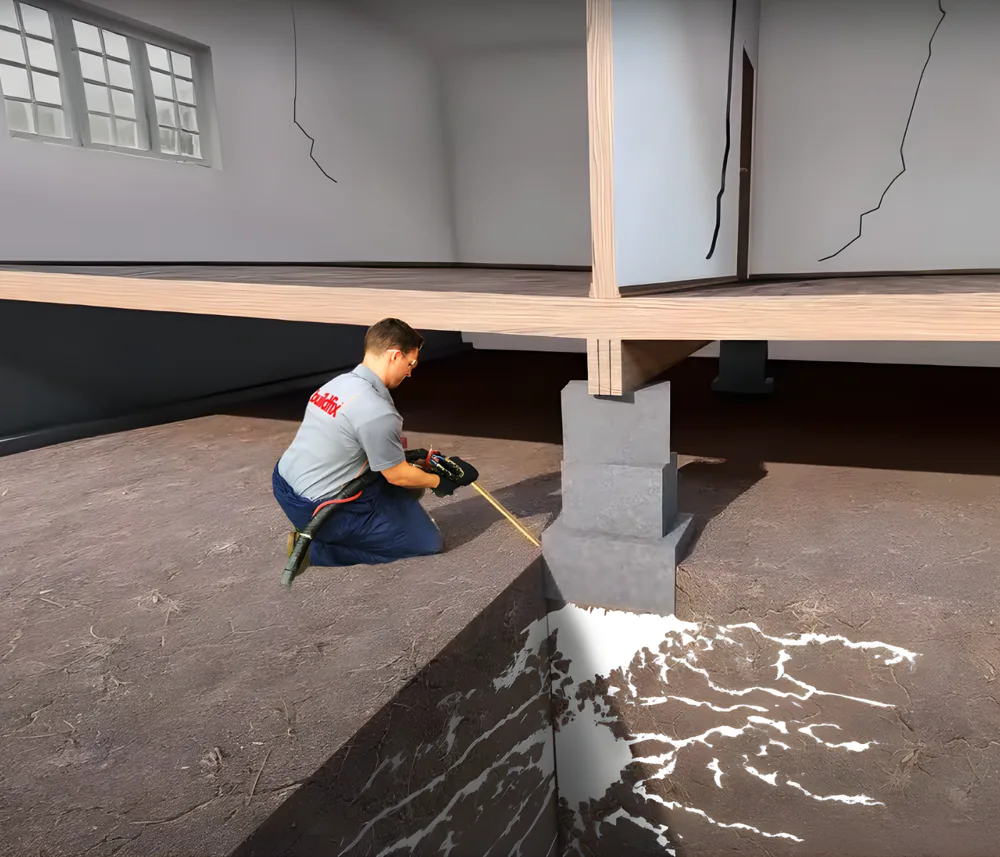
GeoPoly™ resin injection works like keyhole surgery for your foundation. Small, coin-sized holes are drilled around the affected areas, then engineered resin is injected at precise depths beneath your home. The resin expands, fills voids and weak spots in the soil, and lifts your foundation back towards level — all controlled in real time with laser monitoring. No trenches, no concrete, no heavy machinery.

The whole job typically takes a day or two. At a fraction of the cost of traditional underpinning. Your home looks exactly as it did before — except now the foundation is stable, level, and guaranteed for 20 years.

Not sure what's going on beneath your home? That's exactly what the free assessment is for. Get in touch — no obligation, no pressure.

See the difference

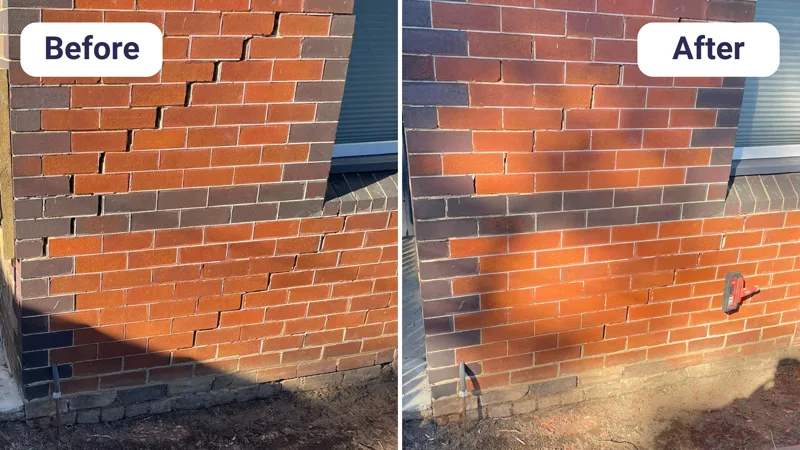
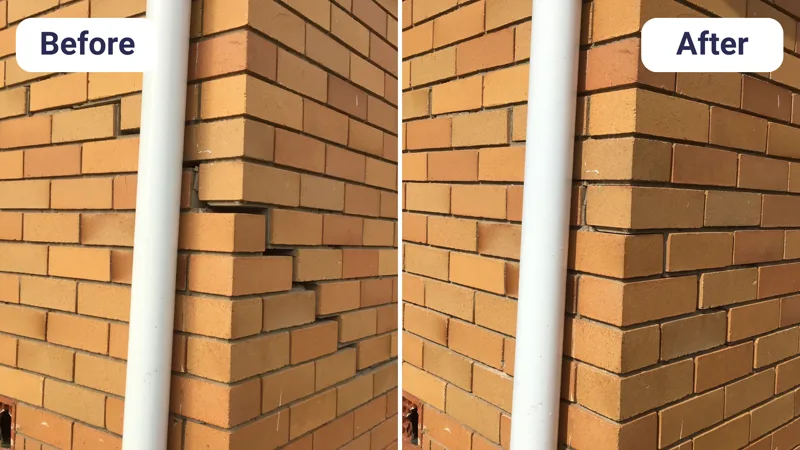
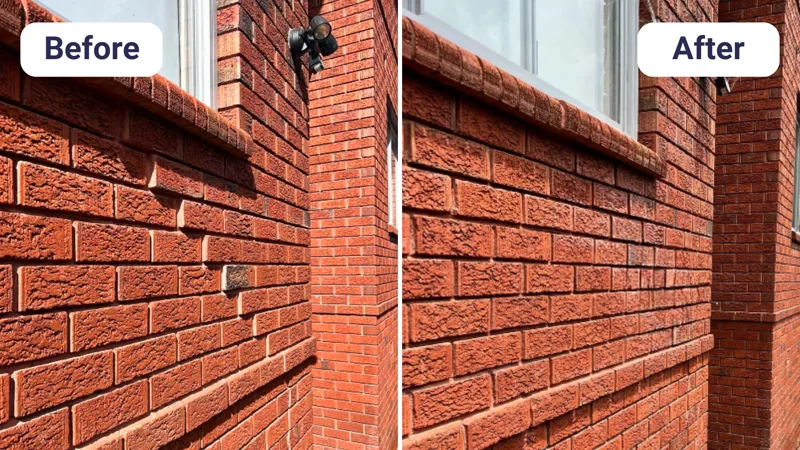
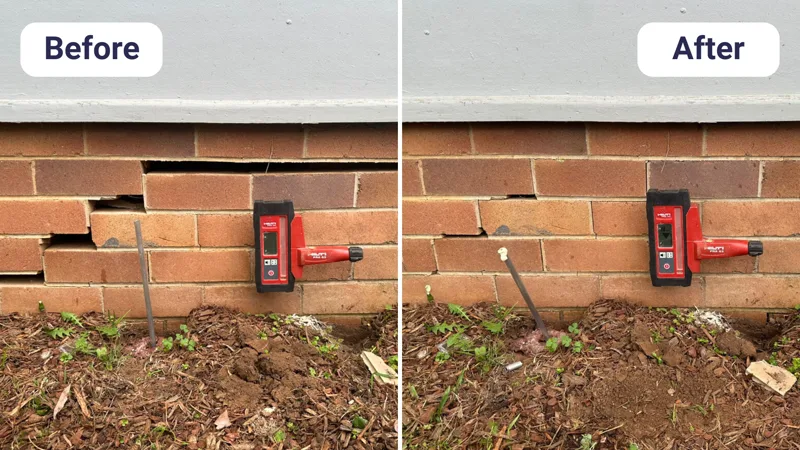
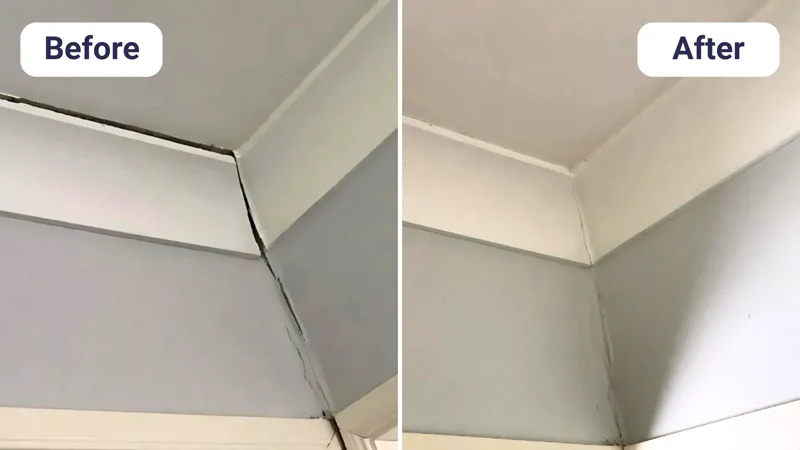
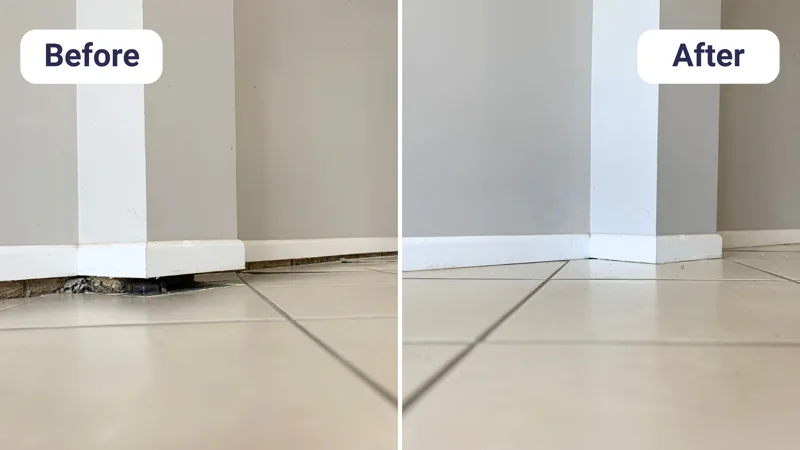
Actual GeoPoly™ projects where foundation damage is permanently repaired.

Brick wall subsidence crack before and after GeoPoly repair
Foundation subsidence before and after re-levelling
Subsidence crack in render before and after repair
Sunken foundation before and after GeoPoly injection
Subsidence damage to brickwork before and after repair
Foundation settlement before and after re-levelling
Brick wall separation from subsidence before and after repair
Subsidence crack repair before and after
Foundation subsidence before and after stabilisation
Brick wall subsidence before and after GeoPoly repair

What to expect

Here’s how we repair your home’s foundations, from first visit to warranty.
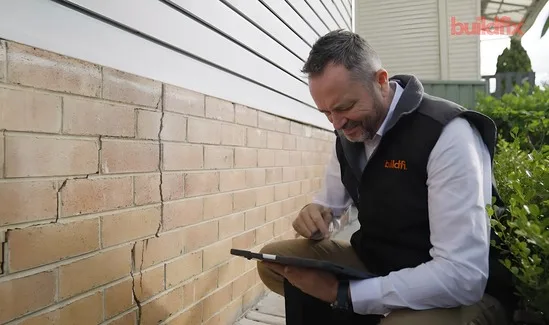
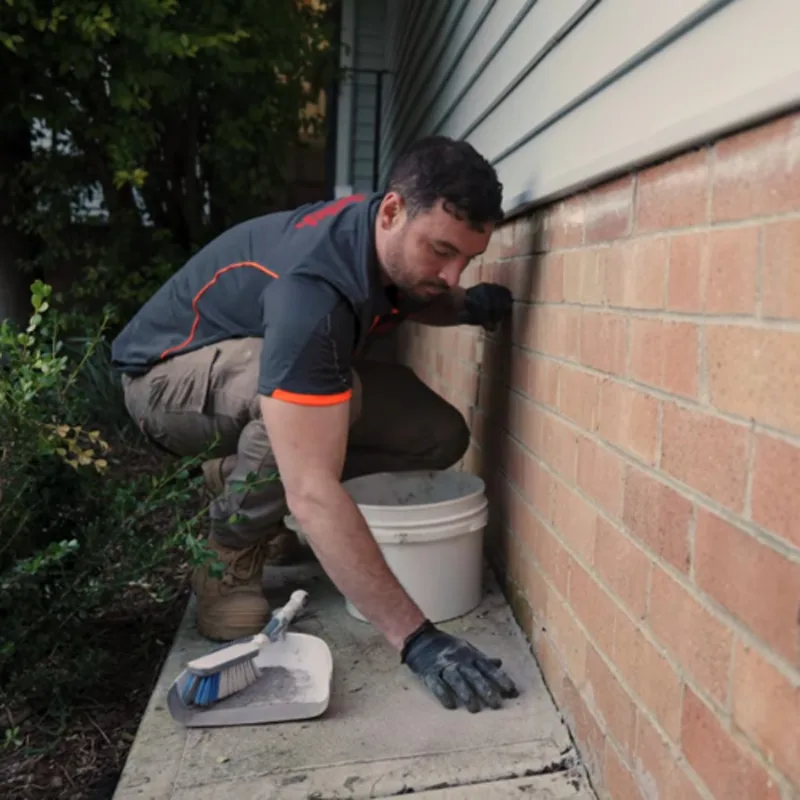
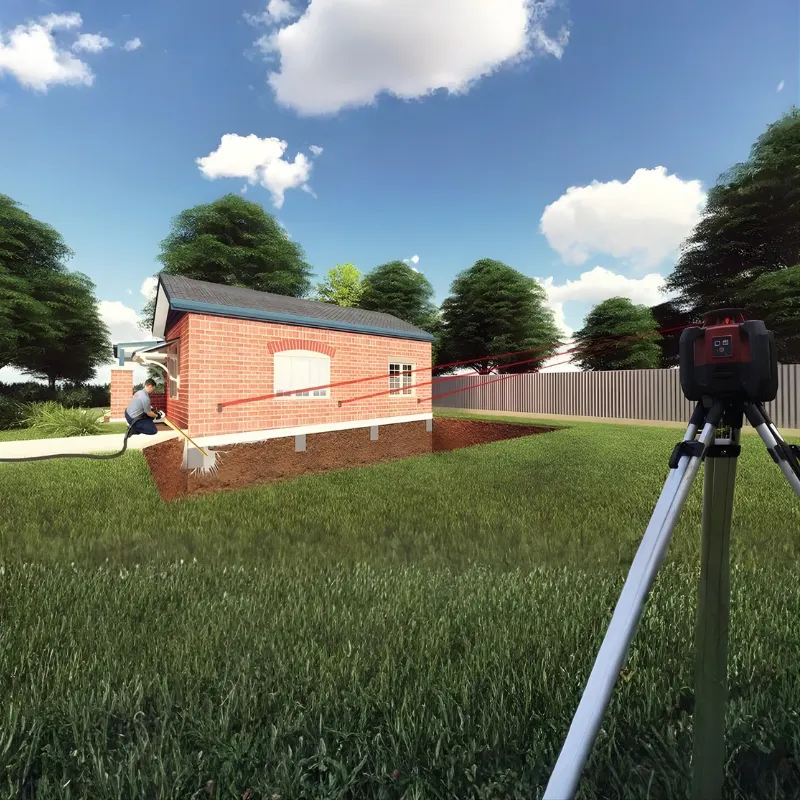
Buildfix structural engineer assessing foundation subsidence with laser level equipmentStep 1

Free Structural Assessment

One of our qualified engineers assesses the subsidence, identifies the root cause, and designs a tailored solution. Repair details — with photos, markings, and measurements — are created on-site using our mobile software, and the price can usually be explained there and then, so you know exactly where you stand.
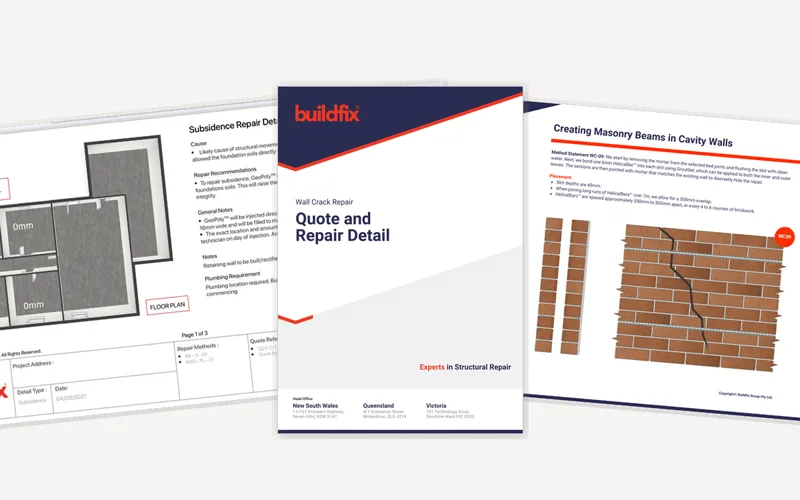
Buildfix quote package showing structural repair detail, quote cover page, and repair method statementStep 2

Get Quote and Book

You receive a complete quote package including detailed drawings, repair method statements, and a fixed-price quote — so you’ll know exactly what it’s going to cost. When you’re ready, book through our online portal (takes about 5 minutes) and we’ll organise suitable dates for the work.
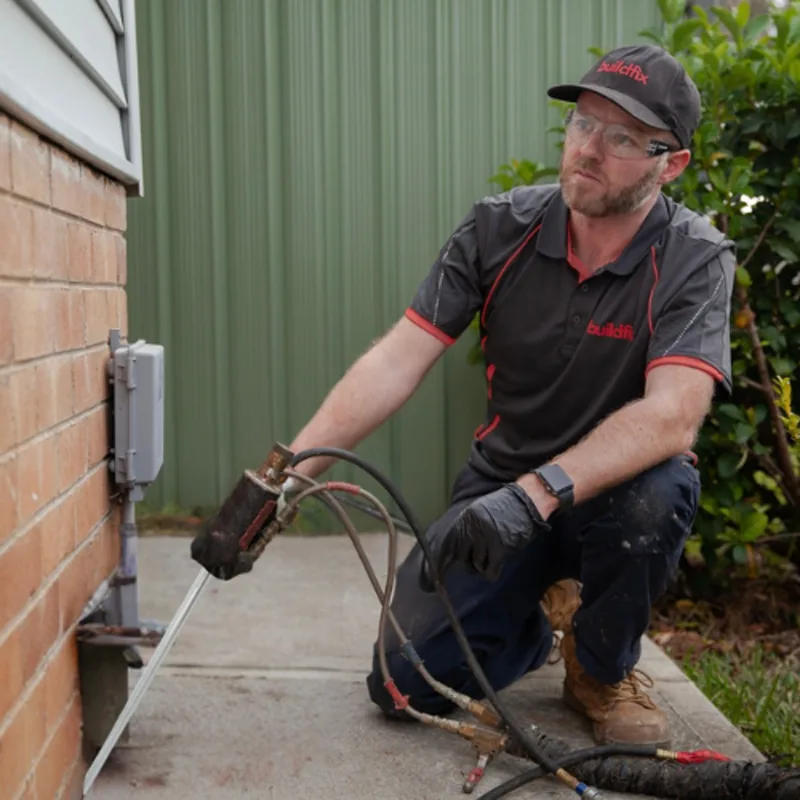
Buildfix technician drilling small coin-sized access holes for GeoPoly™ injectionStep 3

Drill for Access

Small, coin-sized holes are drilled at precise intervals around the problem areas. These allow our injection pipes to reach the exact depths needed beneath your foundation.

Buildfix technicians injecting GeoPoly™ resin beneath foundationsStep 4

Inject, Lift, and Level

GeoPoly™ resin is injected through the access points. The resin expands to fill voids and weak spots, then lifts and re-levels your foundation. Laser levelling equipment and digital sensors monitor every millimetre of movement in real time — so the lift is precise, controlled, and exactly right.

Patched drill holes after GeoPoly™ subsidence repair with clean siteStep 5

Patch and Clean Up

Once the foundation is stabilised and level, we patch the drill holes and clean up. Your home looks exactly as it did before we arrived — except now it’s on solid ground.

Buildfix 20-year warranty badgeStep 6

Receive Your Warranty

A few days after sign-off, you’ll receive your Completion Package — a full report covering the work carried out, materials used, and images from the process. It includes your invoice with links to pay through our portal, and your 20-year warranty documentation. That’s your peace of mind, in writing.

Instant results.
Guaranteed to last.

The benefits of a GeoPoly™ foundation repair.

GeoPoly™ resin is injected 2+ metres beneath your foundations and monitored in real time with laser levelling equipment and digital sensors. Every millimetre of the lift is controlled — so your foundation is brought back to level with precision, not guesswork.

GeoPoly resin injection beneath brick house with laser levelling equipment monitoring precision

Why choose Buildfix?

Buildfix brings qualified engineers, licensed builders, skilled trades, and the manufacturer together under one roof. One team accountable for every step — from assessment to final sign-off. For nearly 15 years, we've been delivering non-invasive structural repairs — saving homeowners the hassle and costs of traditional methods. What used to take weeks now takes just 1 to 2 days.

Here’s why homeowners choose us

20-year warranty: Every repair is backed by a 20-year warranty — transferable if you sell your home.
Under one roof: We assess, design, repair, and manufacture — no need to deal with multiple contractors, because we handle it start to finish.
Fixed pricing, honest advice: No surprises, no tricks — just one fixed price from the start that never changes.
Non-invasive technology: Every method we use is non-invasive — less mess, less stress, and most repairs done in 1 to 2 days.

Watch Video

Learn more about Buildfix and how we permanently fix foundation problems.

Don't take our word for it

Read what our customers are saying.

Trustpilot
Google

Real homes. Real results

See how we’ve helped homeowners fix their foundation problems.

Questions?

We are here to answer any questions you may have Monday – Friday 8am to 4pm AEST. Give us a call on 1300 854 115.
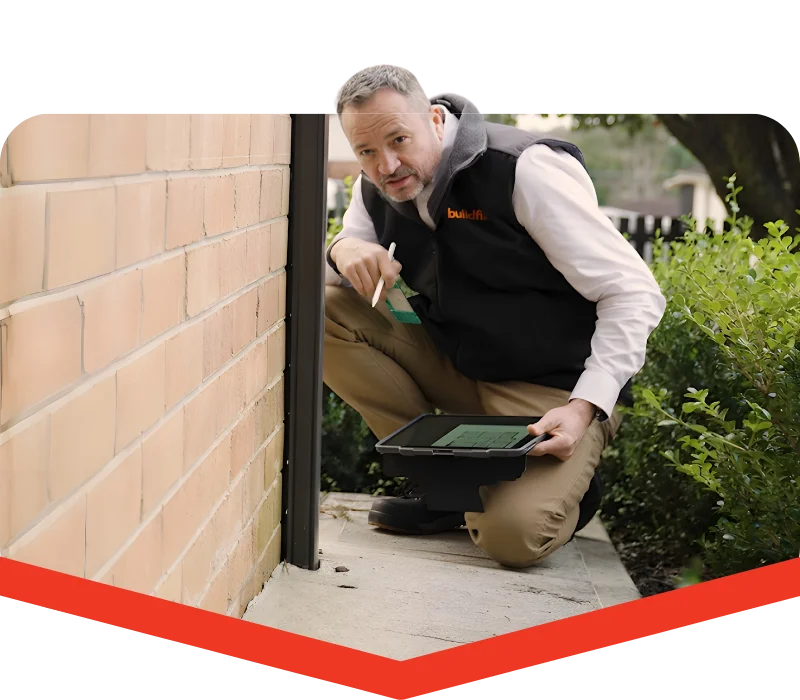
Buildfix structural engineer with client discussing foundation repair

Concerned about your home’s foundation?

We’ll check your home for free and explain exactly what’s happening beneath the surface — and what to do next.

Structural Engineers · Licensed Builders · Skilled Technicians

Copyright © 2026 Buildfix Group Pty Ltd. Buildfix® is a registered trademark, all rights reserved. Privacy Policy | Terms of Use | Site Map

ABN: 90 169 195 411 | Builders Licences: 294990C, QBCC 15114268, CDB-U 100816